Leather occupies a special place in the world of decoration and everyday objects. A living, durable material, often associated with craftsmanship, it accompanies objects that stand the test of time. Yet another material has become widespread: imitation leather, also known as synthetic leather or PU.
At first glance, the distinction may seem subtle. But on closer inspection, whether by touch, smell or the way the material ages, the differences become clear.
Understanding the difference between genuine leather and imitation leather not only helps you choose the right items, but also helps you think about their lifespan and impact.
What is genuine leather?

Genuine leather comes from animal hide, which is transformed by tanning to make it resistant and durable. This process preserves the natural structure of the material: its fibers, irregularities and suppleness.
It is this structure that gives leather its special qualities:
- resistance over time
- skating ability
- soft, warm touch.
In the world of interior decoration, leather is found in objects that accompany everyday gestures: placemats, desk blotters, paper trays or magazine racks.
At Midipy, leather is chosen for its ability to inhabit an object without freezing it, evolving with time and use.
What is faux leather?
Imitation leather is a synthetic material, generally consisting of a textile base covered with a plastic layer (PVC or polyurethane).
Its aim is to imitate the appearance of leather.
It offers a number of advantages:
- lower cost
- uniform appearance
- ease of maintenance.
But it does not have the fibrous structure of natural leather, which influences :
- how it feels to the touch
- its durability
- aging.
1. Touch: a living material or a smooth surface
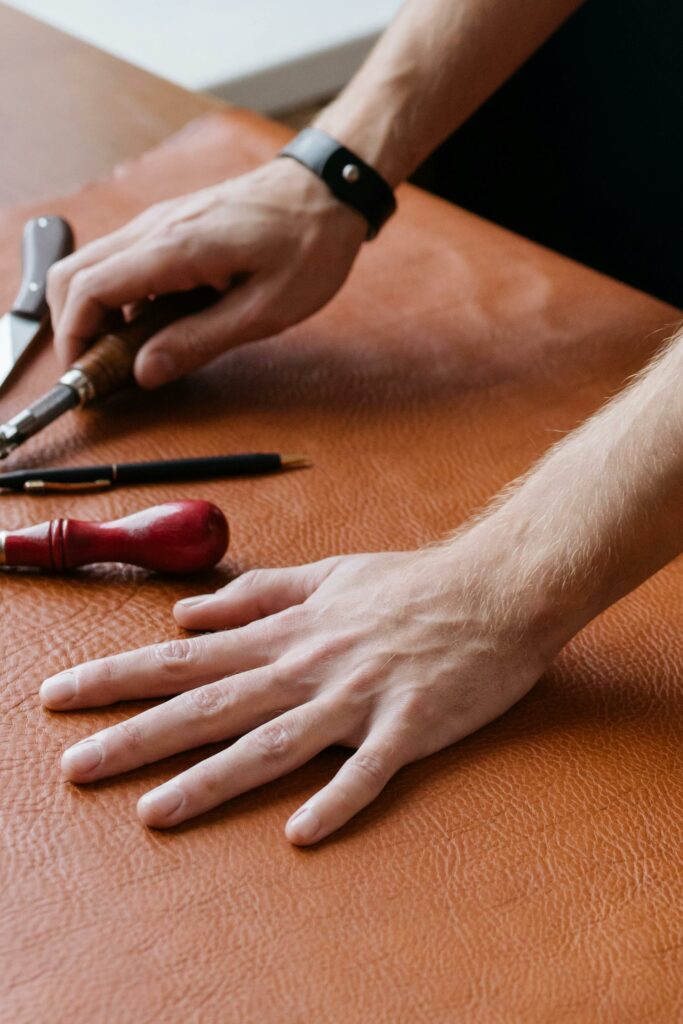
The first clue is often touch.
Genuine leather
Natural leather has a slightly irregular texture. In the hand, it feels :
- hot
- flexible
- organic.
Each piece has slight variations, as the skin retains the memory of its origin.
On an object such as a placemat or desk pad, this contact contributes to the feeling of authentic material.
A Midipy leather placemat, for example, immediately reveals this natural suppleness.
Faux leather
Imitation leather generally offers a :
- smoother
- more uniform
- sometimes slightly plastic-coated.
The touch may seem colder or more rigid.
Over time, this surface can also crack.
2. Smell: an often revealing clue

Smell is a simple but very reliable indicator.
Genuine leather
Natural leather has a characteristic smell, often described as :
- hot
- slightly woody
- deep.
Faux leather
Faux leather gives off :
- a neutral odor
- or plastic smell.
Some imitations try to add an artificial fragrance, but it often remains superficial.
3. Ageing: patina or wear
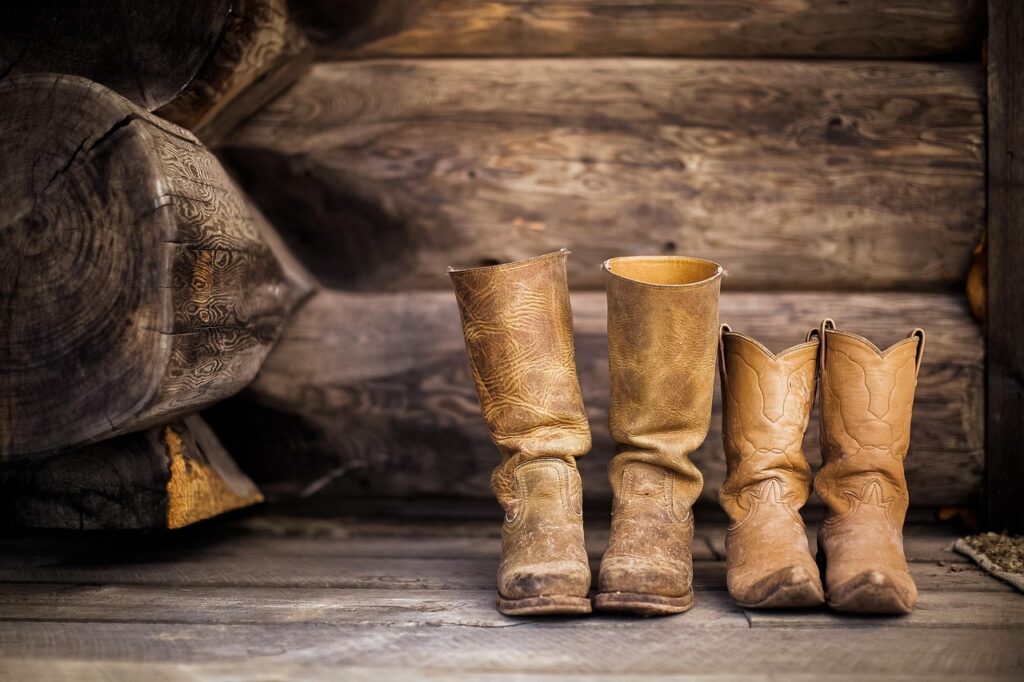
This is perhaps the most important criterion.
Genuine leather
Leather evolves over time.
It develops what is known as a patina, i.e. a slight darkening and softening of the material.
The object gradually becomes unique.
An object like a Midipy leather pocket divider thus takes on a personal dimension over the years.
Faux leather
Faux leather does not weather.
Instead of evolving, it tends to :
- peel off
- crack
- delaminate.
Once the plastic layer has been damaged, the material cannot be repaired.
4. Environmental impact: a question of duration

Comparing real leather and imitation leather also raises the question of environmental impact.
Genuine leather
Leather is often a by-product of the food industry: it adds value to a material that would otherwise have been thrown away.
When properly cared for, a leather object can last for decades.
Its longevity limits object renewal.
Faux leather
Imitation leather is a material derived from plastic.
Its lifespan is generally shorter, resulting in :
- more frequent replacement
- production of waste that is difficult to recycle.
With sustainable decoration in mind, the question of useful life becomes central.
Why this difference is important in everyday objects
In the home, certain objects are handled every day: putting down a book, organizing a desk, setting a table.
The material from which they are made influences :
- ease of use
- their resistance
- their presence over time.
For example, a Midipy leather blotter can be used for everyday gestures, while retaining its beauty over the years.
The choice between genuine or imitation leather is not just a matter of aesthetics: it also concerns the relationship we have with objects.
In a nutshell: the main differences
| Criteria | Genuine leather | Leatherette |
| Touch | Soft, warm, irregular | Smooth, sometimes rigid |
| Odor | Natural, deep | Plastic or neutral |
| Aging | Patina and embellishment | Cracks or chips |
| Service life | Very long | More limited |
Choose objects that stand the test of time
In an interior, some objects disappear quickly, replaced over the seasons. Others remain, transforming slightly as the years go by.
Genuine leather often falls into this second category.
Choosing objects made from sustainable materials, like those offered by Midipy, means choosing a different approach to decoration:
- fewer objects
- but objects that live with us.
A simple way to give objects their rightful place in the long term.