There’s a special category of objects in life: the ones you carry around with you every day, sometimes for years, sometimes forever. A wallet you received when you were twenty. A watch worn by a parent before you. A scarf tied on a winter’s morning and never really returned. These objects aren’t necessarily worth much on the open market. They’re worth everything else.
What sets them apart from all the others is their intimacy with the body and with time. They have experienced the same repeated gestures, the same pockets, the same seasons. They have discreetly accumulated the patina of a lifetime, and this patina is irreplaceable, because it is the visible trace of a human presence.
To offer a durable object today is perhaps to begin this story. Not to offer something precious in the sense of price, but to offer something that can stand the test of time, improve with use, and one day bear the mark of the person who held it in their hands.
This article explores what makes an object pass on naturally, which objects have this ability across cultures and generations, and how to choose a gift with this intention.
1. What makes an object stand the test of time: material, manufacture, timelessness
Not all objects can be transmitted. A ten-year-old cell phone is obsolete. A plastic chair bought in a supermarket has worn out without changing. A synthetic garment has lost its shape after a few years of washing. These objects have a lifespan, not a history.
Objects that stand the test of time have several fundamental qualities in common.
The first is the material. Objects made from natural materials – leather, precious wool, wood, noble metals, silk – age differently from synthetics. They don’t deteriorate: they transform. Vegetable-tanned cowhide worn for twenty years develops a unique patina, unique to the person who used it. Cashmere wool worn with care retains its softness for decades. A solid metal pen transmits the exact weight of the hand that held it.
The second quality is craftsmanship. An object made by hand by an artisan contains a human presence that industrial production cannot reproduce. The micro-decisions taken at each stage, the choice of that piece of leather, the tension of a stitch, the way an edge is finished. All this is invisible to the eye but perceptible to the touch, and gives the object its character, that indefinable quality that we recognize without always knowing how to explain it.
The third is simplicity of design. Objects that cross generations are rarely those that follow a trend. They are those that have the right, timeless form, that belong to no particular era and can therefore belong to all.
2. Objects that circulate between generations
In almost every culture in the world, certain objects pass through families like living archives. They are not displayed in showcases. They are worn, used and passed from hand to hand with the same naturalness as a family name. What’s striking, when you think about it, is the diversity of these objects, and yet something connects them all.
The watch is undoubtedly one of the most universal objects of transmission. Worn on the wrist, it knows the rhythm of the wearer’s life: his or her efforts, joys and travels. A well-maintained mechanical watch can pass through three or four generations without failing. It is the exact symbol of what it means to pass on: passing on something that continues to function, to mark time, long after the hand that gave it has stopped.
Jewelry is one of mankind’s oldest objects of transmission. Rings, bracelets and necklaces have been passed down through the generations for millennia, each time taking on a new meaning. To receive a bracelet from a parent is to receive something of their presence that no photograph can replace. In many cultures, jewelry is not chosen, it is received, and this is precisely what gives it its charge.
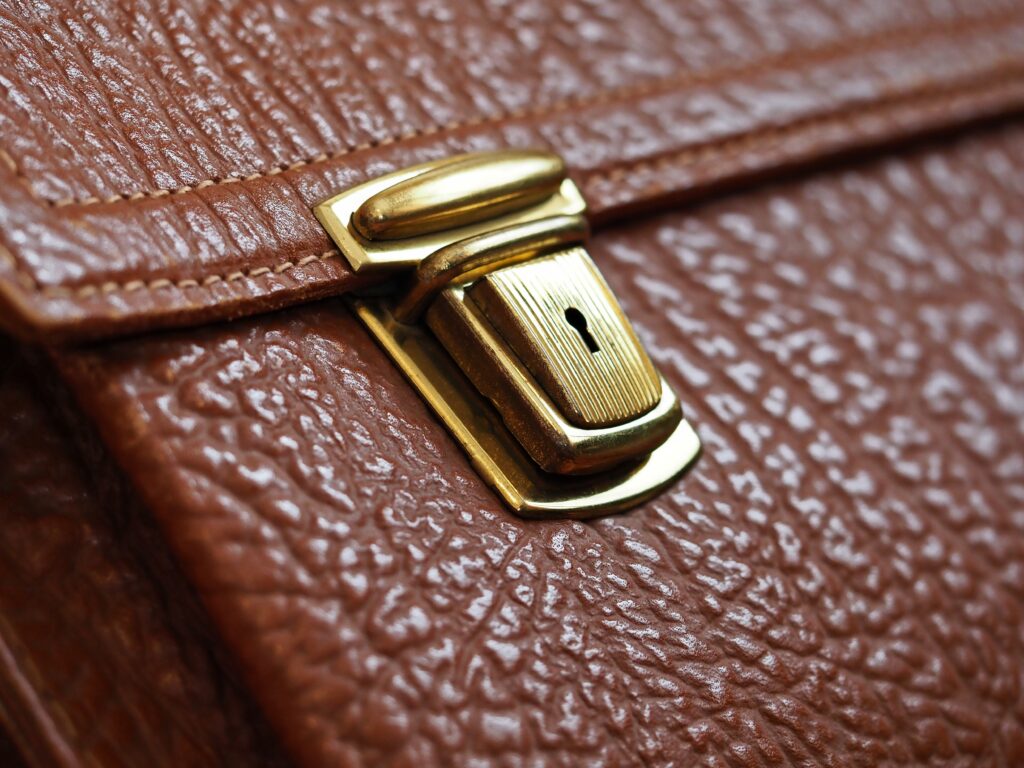
A quality leather bag has the same capacity. Worn daily for years, it becomes a second skin. It knows the same journeys, the same contents, the same opening and closing gestures. Old leather goods manufacturers know this: their most emblematic pieces are those that can be recognized in three generations of family photographs. A well-made bag never goes out of fashion and, over time, becomes a discreet portrait of its wearer.
Scarves have a special lightness of transmission. A square of silk or a cashmere scarf kept for decades retains its beauty and softness. It passes through fashions because it doesn’t really follow any of them. It belongs to the person who ties it, and to him alone. There’s something infinitely intimate about a scarf handed down: the way it was knotted, the scents it absorbed, the softness it provided on cold mornings long forgotten.
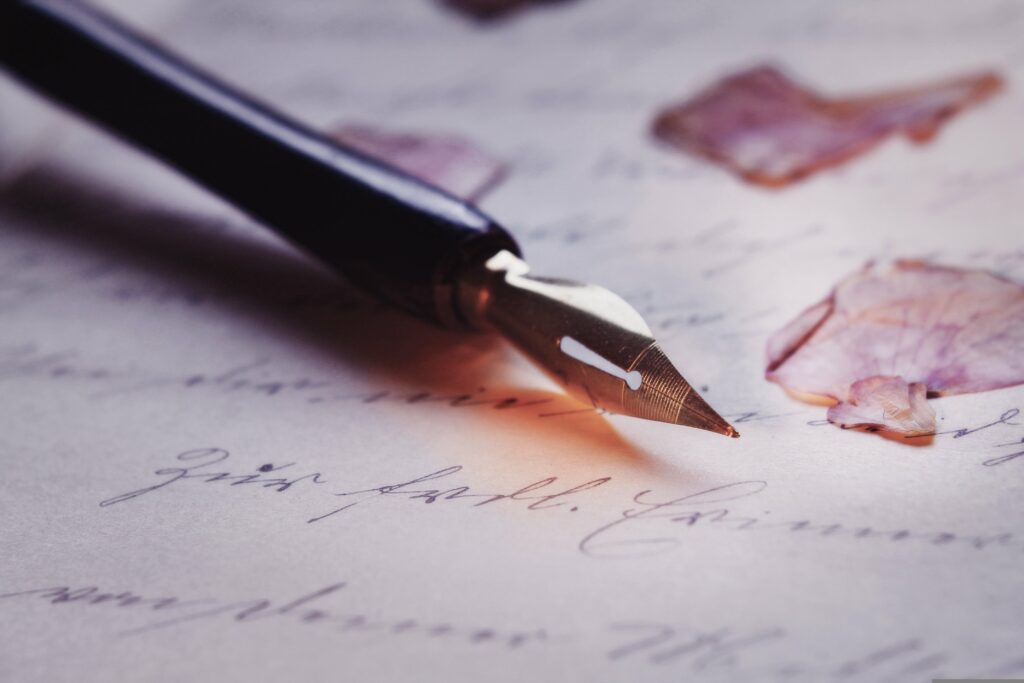
The pen is the object of intellectual transmission par excellence. A solid metal pen that we’ve seen held between a parent’s fingers to sign important letters, contracts and birthday cards. This object carries a symbolic charge that few others can match. There’s something deeply personal in the act of writing, and to receive someone’s pen is to receive, in a way, the imprint of their thoughts.
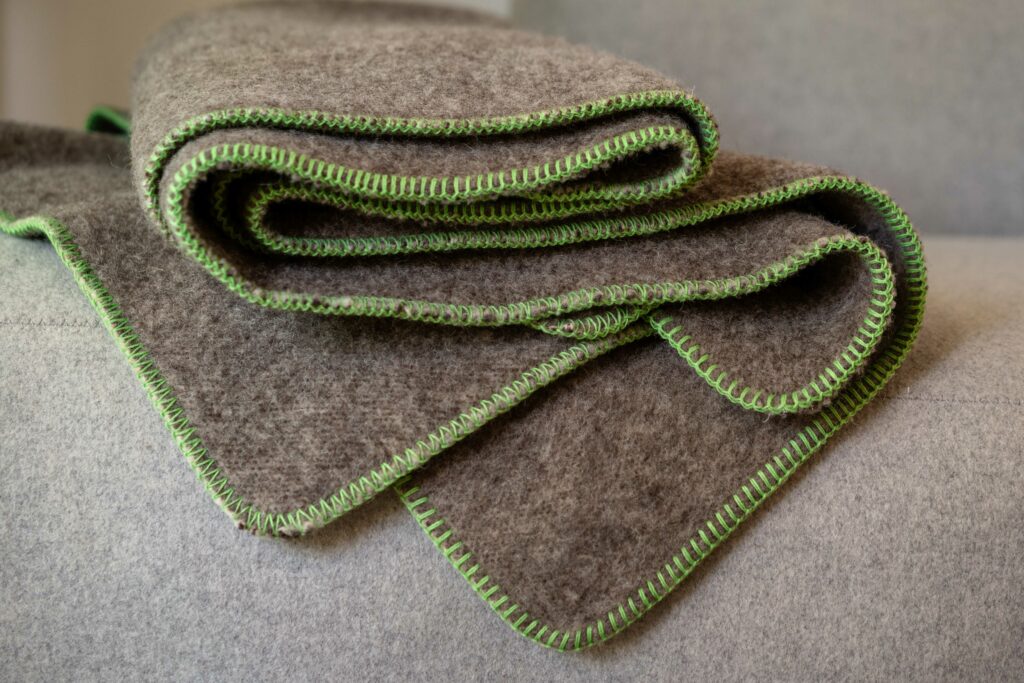
The precious wool plaid – cashmere, alpaca, mohair – is an object of transmission of comfort and softness. In some families, a throw is placed on the same sofa for several generations, carrying the memory of all those who have wrapped themselves in it. Its natural material, if carefully cared for, does not degrade, but softens. To receive a natural wool throw is to receive something of someone’s warmth.
The leather desk blotter embodies something more discreet but just as powerful: someone’s workplace, the space where decisions are made, letters written, projects built. A leather blotter sitting on a desk for thirty years bears the trace of thousands of hours of concentration. Passed on to someone who in turn takes his or her place in life, it is a particularly meaningful form of passing on the baton.
We should also mention the photos and posters, the annotated books, the notebooks filled with tight handwriting. All these objects have no market value, but an absolutely considerable human value. What they have in common is that they have been touched – often for a long time – by a hand that is no longer there or will one day be elsewhere. And it is precisely this trace, invisible and yet so present, that keeps them.
3. Giving with the intention of passing on: how to choose

Choosing a gift with the intention that it will one day be passed on is choosing differently from an ordinary gift. It’s not a question of price, it’s a question of the quality of the material, the care taken in manufacture, and the timelessness of the design.
A few simple questions can guide this choice. Is this object made from a natural material that ages well – vegetable-tanned leather, precious wool, noble metal? Is it handmade by an artisan, or mass-produced? Is its design sober and timeless, or is it linked to a passing trend? Can it develop a patina with use, i.e. become more beautiful with age rather than deteriorate?
An object that answers yes to these four questions has every chance of standing the test of time. And to be passed on one day, charged with the presence of the person who wore it.
At Midipy, we hand-make objects designed to last in our partner workshops in the Tarn region of France: genuine, vegetable-tanned leather items handmade in France (card holders, double bracelets, placemats, desk pads), and plaids in natural wool (sheep, alpaca, mohair, cashmere) woven in France. Simple, carefully crafted objects that will stand the test of time and one day bear the mark of the person who chose them.
5. Frequently asked questions about transmittable objects
What is it about an object that can be handed down from generation to generation?
A transmissible object generally combines three qualities: a natural material that ages well and develops a patina with use, meticulous craftsmanship that gives it real durability, and a timeless design that belongs to no particular fashion. Objects made of genuine leather, precious wool, solid metal or noble wood naturally meet these criteria – they embellish over time rather than degrade.
Why give a handcrafted object rather than a brand-name item for a lasting gift?
A handcrafted object contains an irreducible human presence: that of the craftsman who made it gesture after gesture. This presence can be felt to the touch, in the slight imperfections that make a piece unique. A brand-name object may be beautiful and durable, but it can be reproduced identically millions of times over. A handcrafted object is singular, and it is precisely this singularity that enables it to become personal, and then transmissible.
How do you care for a leather object so that it lasts for generations?
An object made from vegetable-tanned cowhide is easy to maintain: an application of wax or nourishing cream for natural leather two or three times a year is enough to keep it supple and nourish its patina. Prolonged exposure to direct humidity and excessive heat should be avoided. With these minimal precautions, a well-crafted leather object can last several decades and develop a unique patina that bears witness to its history of use.
Can natural wool plaid really be passed on?
Yes, as long as it’s made from natural wool – cashmere, alpaca, mohair or sheep’s wool – and is carefully cared for. A natural wool throw washed cold, dried flat and stored away from moths can retain its softness and shape for decades.
6. Conclusion
To give an object with the intention of passing it on one day is to offer something that few gifts can claim to give: a presence in time. Not just in the days that follow, but in the years, and perhaps decades.
It’s this intention that guides the way we make things at Midipy: simple objects, in natural materials that last, handcrafted by artisans we know. Objects that can one day bear the imprint of the person who chose them, and continue their journey in other hands.
If you’re looking for a gift that’s also a gift for the long haul, we invite you to discover our collection or write to us to find just the right object. And if this subject touches you, you might also like our reflection on slow decorating – living consciously and revealing your interior.