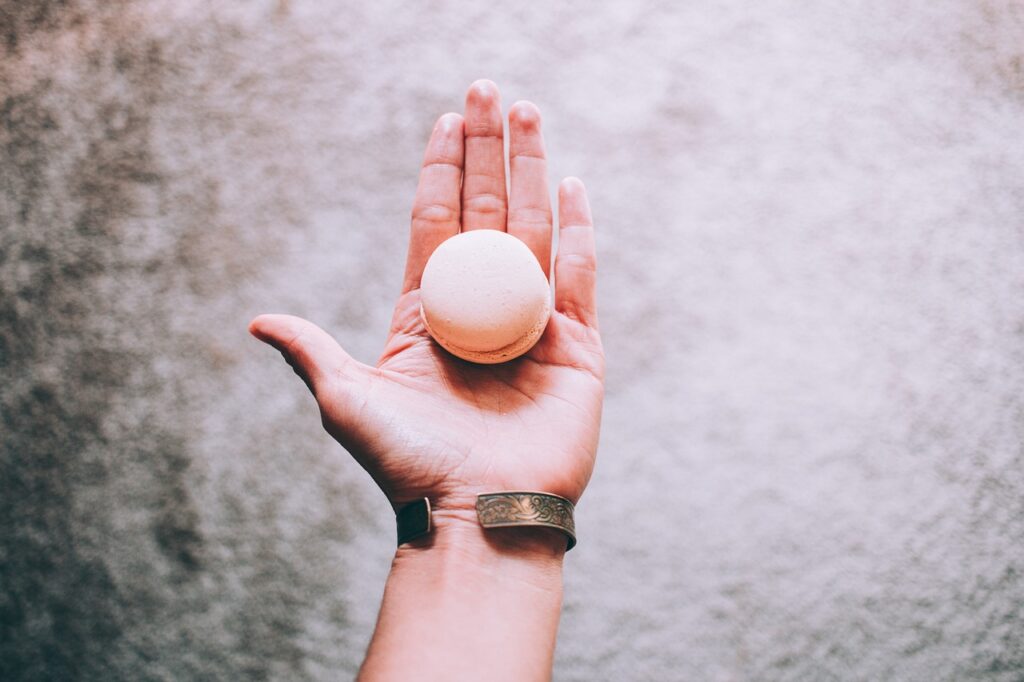
The bracelet is one of the oldest pieces of jewelry known to mankind. Long before pearl necklaces and gold rings, even before the first organized civilizations, men and women knotted something on their wrists (a thread with a stone or a piece of bone, a leather strap), and this gesture was not insignificant. The symbolism of the bracelet has remained remarkably constant over the millennia: protection, belonging, love, memory, status. Depending on the culture and the era, the bracelet has signified everything except indifference.
What’s striking about this long history is the permanence of the gesture itself. To wear something on the wrist is to choose to mark one’s body at the precise spot where the pulse beats, where life is felt beneath the fingers. It’s probably no coincidence that all civilizations, without consulting each other, have made the wrist a place of meaning.
This article explores what the bracelet has represented throughout the world’s great cultures, what it still says about us today, and why the choice of material from which it is made is never entirely neutral.
1. The bracelet in great civilizations: a universal object charged with meaning
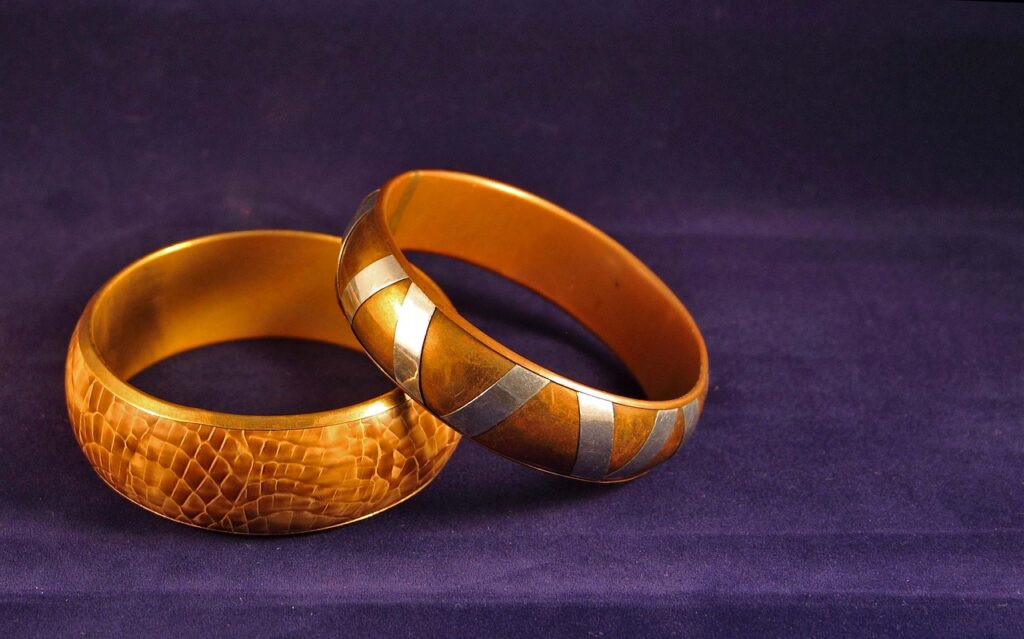
The oldest bracelets found by archaeologists date back over 40,000 years. Fragments of polished bone and ivory, discovered in the Denisova cave in Siberia, testify to an already sophisticated intention: to pierce, polish and shape a material into a wearable object. This is not survival. It’s culture.
In ancient Egypt, bracelets were both ornaments and talismans. Made of gold, colored earthenware, bone or leather, Egyptian bracelets bore motifs charged with meaning: the scarab beetle for rebirth, the Ouroboros serpent for eternity, the eye of Horus for protection. They can be found in the tombs of pharaohs and ordinary craftsmen alike. The protection they offered was not reserved for the powerful.
In Mesopotamia, bronze or silver bracelets marked social status with almost administrative precision. Cuneiform texts mention bracelets offered at religious ceremonies, weddings and treaties between sovereigns. To offer a bracelet was to pledge one’s word as much as one’s gold.
In ancient Greece and Rome, bracelets took many forms, depending on who wore them. Greek warriors wore leather or bronze armbands to protect their forearms in battle, these functional objects becoming symbols of bravery over time. Roman women wore gold snakes wrapped around their wrists, symbols of fertility and divine protection. Slaves wore metal bracelets to mark their status: the same object, charged with opposite meanings depending on who wore it.
In Asia, bracelets play a central role in many traditions. In India, the colored glass bracelets worn by married women (churis or bangles) tell in a single gesture the status, region of origin and faith of the wearer. Breaking a bangle is a bad omen. Wearing many is a sign of good fortune. In China, jade bracelets are handed down from generation to generation as a family talisman, jade being considered a material that absorbs the wearer’s energy and protects him or her in return.
2. The bracelet as a link between people
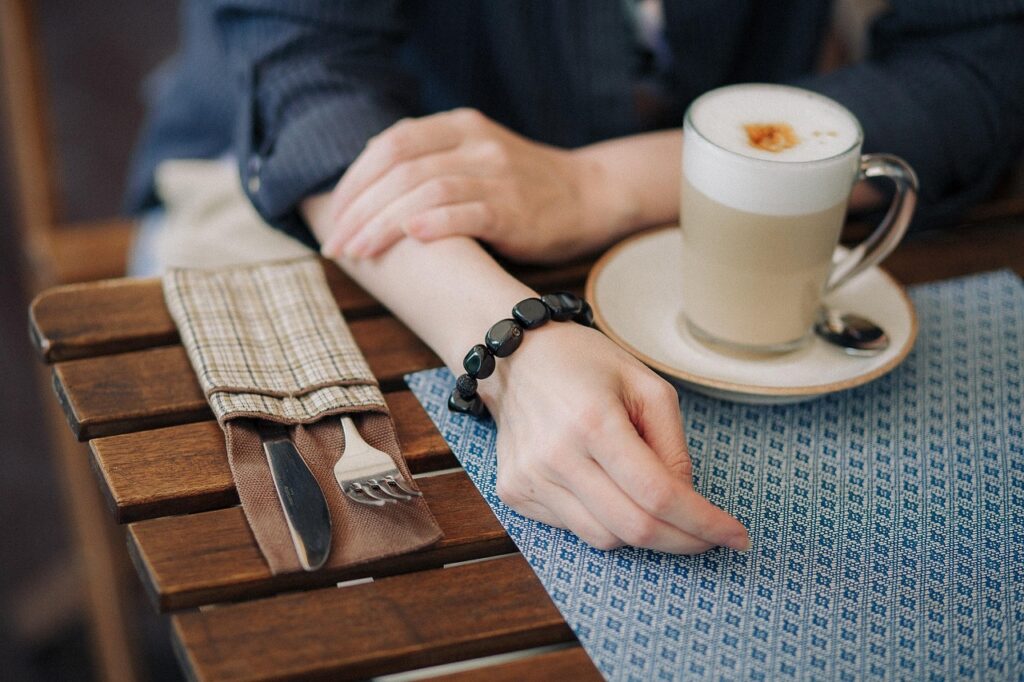
If the bracelet has crossed so many cultures with such constancy, it’s perhaps because it responds to something profoundly human: the need to make visible what is invisible. Love, friendship, mourning, faith – these are all inner states that the bracelet has been used to materialize for millennia.
In the European Middle Ages, offering a bracelet or wrist tie was a codified gesture of declaration of love. Troubadours wore their lady’s colors tied to their arm as a sign of devotion. Knights set off on crusades with a thread or ribbon tied by a beloved hand.
In many African cultures, the bracelet handed down from mother to daughter or father to son is a living archive. It is not chosen, but received. Each generation that wears it adds its own history, its own wear, its own patina. The jewel thus becomes an object of collective memory, much more than a personal accessory.
The friendship bracelet, tied to the wrist by a hand other than one’s own, exists in a variety of forms on almost every continent. In Central and South America, brightly-colored braided bracelets exchanged between friends symbolize a bond that will last until the thread naturally breaks, a moment that is itself interpreted as a sign.
In some cultures, bracelets also accompany death. In traditional Japan, wooden prayer bracelets known as juzu are worn during funeral ceremonies and kept afterwards as a memento of the deceased. In some African and Amerindian traditions, bracelets are woven from hair or fibers that belonged to the deceased, a way of keeping the dead close to the living, both materially and symbolically.
This link between the bracelet and the memory of the absent also runs through European history. Victorian mourning jewelry, or hair jewelry, often included bracelets woven from the hair of the deceased, worn by loved ones for years as a tangible reminder of a lost presence.
3. What choosing a bracelet still says about us today
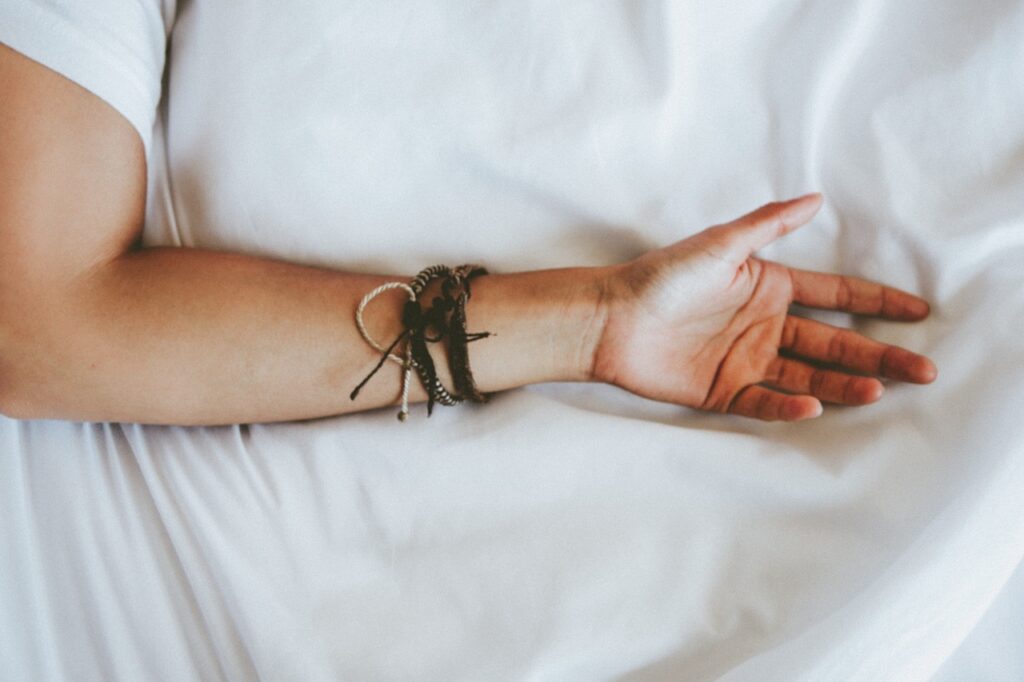
In a world saturated with mass-produced accessories that are worn for a few weeks before being replaced, a carefully chosen bracelet regains something of its original dimension. We no longer choose a bracelet to signal our social status or protect ourselves from evil spirits, or at least not explicitly! But we still choose a bracelet to say something: a belonging, a value, a memory, a way of being in the world.
What fundamentally distinguishes a handcrafted bracelet from an industrially produced one is not just the material from which it is made, but the human presence it contains. A bracelet handcrafted by an artisan has been cut, shaped, assembled and finished gesture by gesture, with decisions made at every stage. The choice of this stone rather than another, the way an edge is sanded, the tension of a sewing thread – all these micro-decisions are invisible to the eye but perceptible to the touch, so that no two pieces are quite the same.
It is precisely this subtle imperfection that gives a handcrafted bracelet its character. Where industrial production seeks perfect reproducibility, craftsmanship assumes variation, singularity and the trace of gesture. A bracelet born of expert hands carries something no machine can reproduce: the time a human being has devoted to it, and the intention that accompanied it.
Wearing a handcrafted bracelet today means reconnecting with the ancient idea that jewelry is not an interchangeable ornament, but an object that lasts, that tells a story and that will last.
4. Frequently asked questions about bracelet symbolism
What is the significance of giving a bracelet?
Giving a bracelet is a gesture charged with meaning in almost every culture in the world. Depending on the tradition, it symbolizes a bond of friendship, love or protection, a promise, or the transmission of a family legacy. In many cultures, the offered bracelet is worn until it naturally breaks, a moment seen as a sign that the wish it carried has been fulfilled.
Why is the wrist the preferred location for symbolic jewelry?
The wrist is the place on the body where the pulse is most easily felt, where life is literally felt beneath the fingers. This proximity to the vital flow has probably contributed to making the wrist a place of meaning in all human cultures. To wear something at this precise point is to associate it with what’s beating inside you.
What’s the difference between a natural and an industrial bracelet?
A bracelet made from natural materials (vegetable leather, stone, wood) evolves with time and the wearer. It develops a patina, becomes more supple and retains traces of its use. An industrial bracelet in plated metal or plastic wears out without changing, losing quality without gaining character. The former tells a story; the latter is deprived of one from the outset.
Does the bracelet have a different meaning depending on which wrist it’s worn on?
In some traditions, yes. In India, the left wrist is associated with receiving energies and the right with emitting them. Protective bracelets are often worn on the left. In Western tradition, there are no strict rules, but some people instinctively choose one wrist over the other, depending on their dominant hand or how they feel. Above all, the meaning is personal.
Conclusion
The bracelet is perhaps the most human of jewels, the one that crosses the most geographical, cultural and temporal boundaries without ever losing its symbolic charge. Protection, bonding, memory, transmission: it has carried it all, and continues to do so, in its own discreet yet constant way.
Choosing a bracelet today with the same care as our ancestors chose theirs, means renewing this long tradition of jewelry as an object of meaning. If you’d like to discover our double leather bracelets handcrafted in our partner workshop in the Rhône region, or find out more about genuine leather and its properties, we invite you to explore the Midipy collection.