
In a world saturated with objects, choosing becomes an act of commitment. Behind every product lies a story: that of its design, its materials, and the people who made it. This is particularly true of handcrafted objects, whose uniqueness reflects a human, local and sustainable commitment.
There are many profound differences between a handcrafted object and a mass-produced one. They concern the origin of materials, the gesture that shapes them, the time invested, and the social or environmental impact.
This article invites you to decipher the differences between handmade and mass-produced objects, and to make more informed choices.
A world of objects: what story do we want to tell?

Every everyday object carries a silent message. It may or may not tell the story of a particular way of producing, consuming or viewing the world. A handcrafted object is a singular piece, the product of human gesture, time and transmission. It carries with it a form of vulnerability: it is not perfect, because it is handmade. Slight irregularities may appear, marks of its authenticity. This is what profoundly distinguishes a handcrafted object, alive and expressive, from a manufactured product without relief. Far from being defects, these nuances are proof that a craftsman has taken his time, has observed, has shaped.
An industrial object, on the other hand, responds to a logic of standardization. It is produced on a large scale, by machines designed to repeat the same gesture over and over again. The result is regular, uniform and perfectly calibrated. But this “perfect” is also synonymous with disconnection: the object has no soul, it’s interchangeable, unanchored.
The human gesture: at the heart of craftsmanship
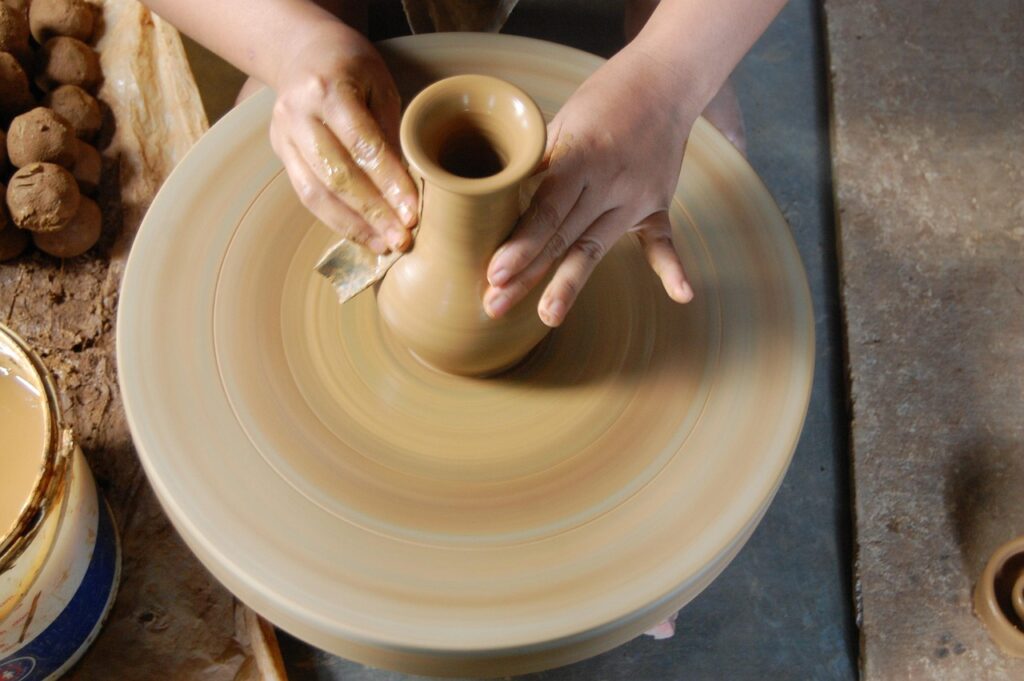
In craftsmanship, each object is the fruit of an encounter between a living material and an expert hand. Manual work introduces variability and richness into the expression of know-how.
Leather, for example, reacts differently to different areas, pressure and humidity. Wool changes texture according to washing or carding. The artist-craftsman has to feel, adapt, correct and sometimes improvise. There’s no “ON” or “OFF” button. It’s this intelligence of gesture that gives handcrafted objects their profound value, far beyond their mere utility.
The machine, on the other hand, performs repetitive gestures, without variation or feeling. This means higher yields and lower costs, but at the cost of a loss of singularity. The industrial gesture is dissociated from meaning. The same object can be reproduced a thousand times, identical, indifferent.
Commodities: the invisible that changes everything
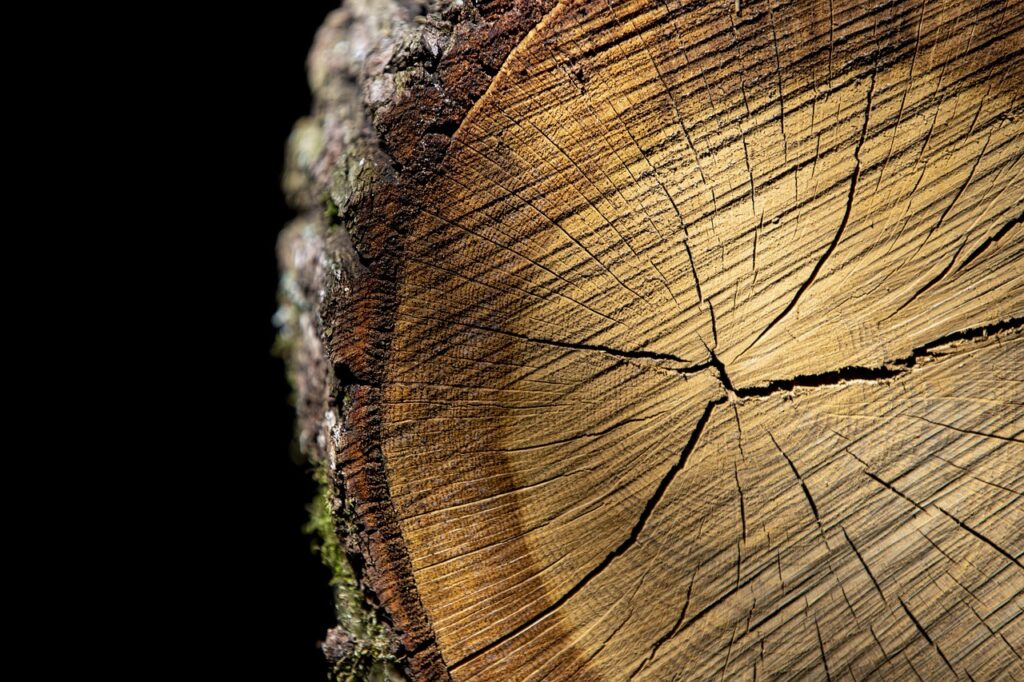
In craftsmanship, materials are chosen for their nobility, durability and ability to age gracefully. We work with solid wood, earth, fabric, genuine leather, wool, silk… These materials tell the story of an origin, a season, a terroir. Their trace is preserved in the final object.
Mass production favors low costs and standardized materials: reconstituted wood, plastic, PU leather, synthetic fibers. These materials are often petrochemical, difficult to recycle and have a high environmental impact. They tell us nothing other than the story of their industrial transformation. Conversely, a handcrafted object favors natural, meaningful and sustainable materials.
Production and distribution chains
The way an object passes from the workshop to our homes also changes everything. Handcrafted objects follow short circuits. They are made locally, distributed via trusted networks, or directly by the creators themselves. This proximity guarantees greater traceability and transparency. It also reinforces the human and local dimension of the artisanal object, anchored in a territory and a community.
Industrial objects follow the opposite logic. They often travel from continent to continent before arriving on a shelf. They pass through the hands of multiple intermediaries: subcontractors, distributors, platforms. This model dilutes responsibility, blurs production conditions and increases the carbon footprint.
Why does this change everything?
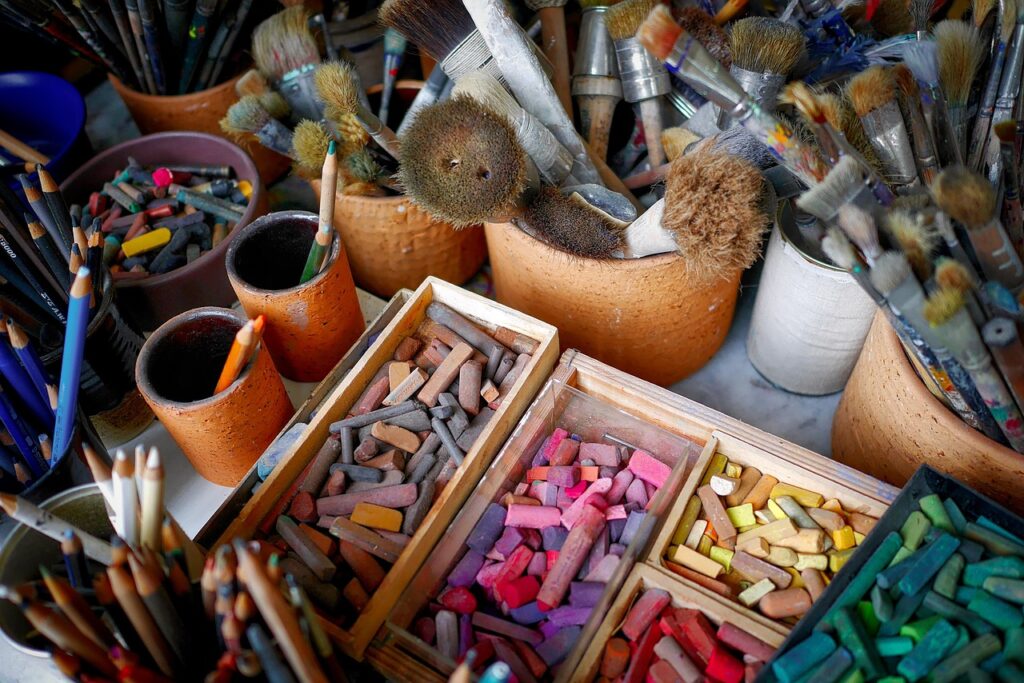
- Craftsmanship respects time and natural rhythms.
- It promotes manual work and local skills.
- It encourages the transmission of know-how.
- It reduces the ecological footprint thanks to short circuits.
- It produces less, but better.
- It restores the value of gesture and handcrafted objectsas a response to more conscious consumption.
Tip to remember: take a good look at an object before you buy it. Is it perfectly uniform? Are they hiding their origin? Is the price so low as to be suspect? These clues can help you identify whether it’s handcrafted or not.
What if alternative consumption were the real luxury?
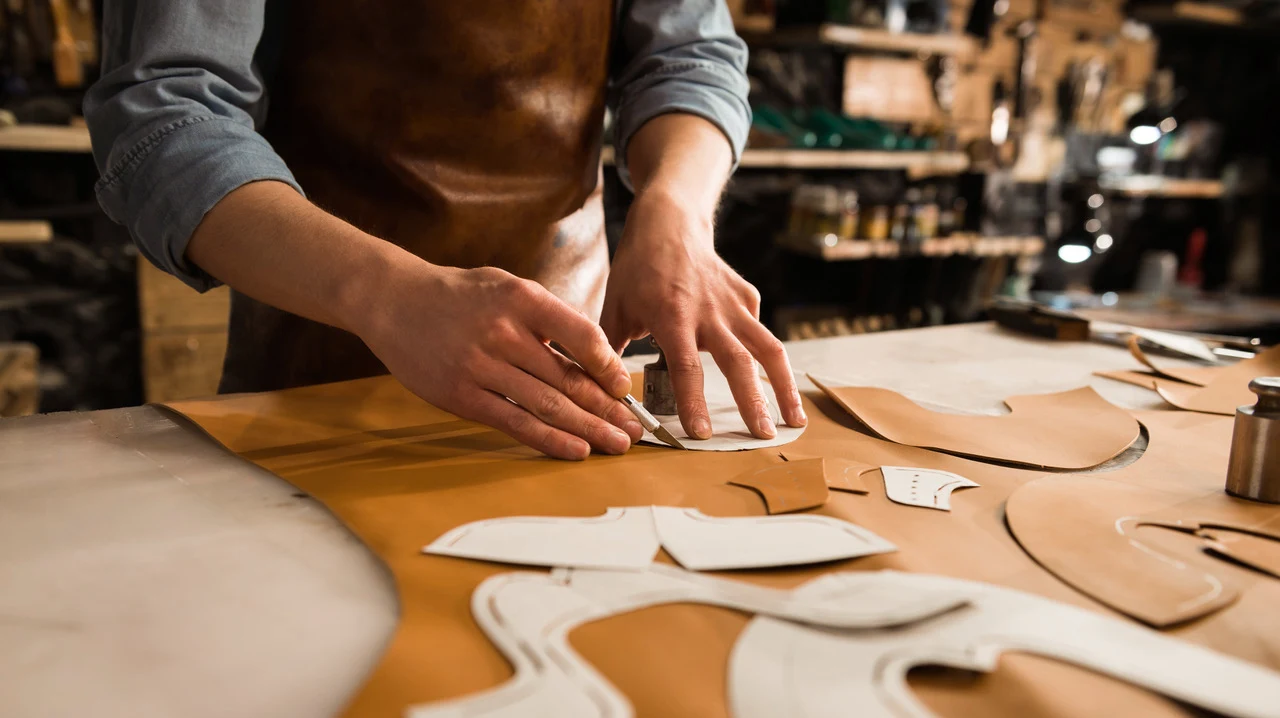
Choosing craftsmanship means opting for meaningful objects, designed with care and humanity. It means choosing quality over quantity, the essential over the superfluous. Each piece tells a story, embodies know-how, and creates a lasting bond between the maker and the recipient.
And what if this was the true richness of handcrafted objects: to bring our relationship with things, with others, with life, into being in a different way?